TL;DR
Messenger Kids is the most direct comparison to Shoal: a messaging product designed specifically for under-13s, with parental approval of contacts. The key differences are who runs it, what kind of company they are, and where you can get it. Meta is in the advertising business; Shoal isn’t, won’t be, and is structurally arranged so it can’t slide into one. And Meta doesn’t currently offer Messenger Kids in the UK or most of Europe.
What Messenger Kids does well
Messenger Kids has obvious strengths: a kid-friendly UI, a Parent Dashboard for approving contacts (or letting children add them, with a parent able to override), no ads in the app, no in-app purchases, a free price tag, and the operational reach of a company that ships to billions of devices. It has also been around since 2017, so the product is mature.
For households that are comfortable in the Meta ecosystem, it’s a credible option where it’s offered — though Meta doesn’t currently offer Messenger Kids in the UK or most of Europe.
Where Shoal is different
Independent of any social media company. Shoal has no parent company in the advertising business. We don’t carry an obligation to a wider product family that monetises attention. We exist to do one thing — let families talk privately — and the business model is families paying us, not advertisers paying for kids’ attention.
Encrypted before it leaves the device. Shoal messages, photos and voice notes are encrypted on the sending device with AES-256-GCM and stored as ciphertext that we don’t decrypt in normal operation. Neither app is end-to-end encrypted: Meta’s default end-to-end encryption on Messenger doesn’t extend to Messenger Kids, and parental oversight in Shoal needs someone other than the child to hold the keys. Our security page sets out exactly what Shoal’s encryption does and doesn’t protect against.
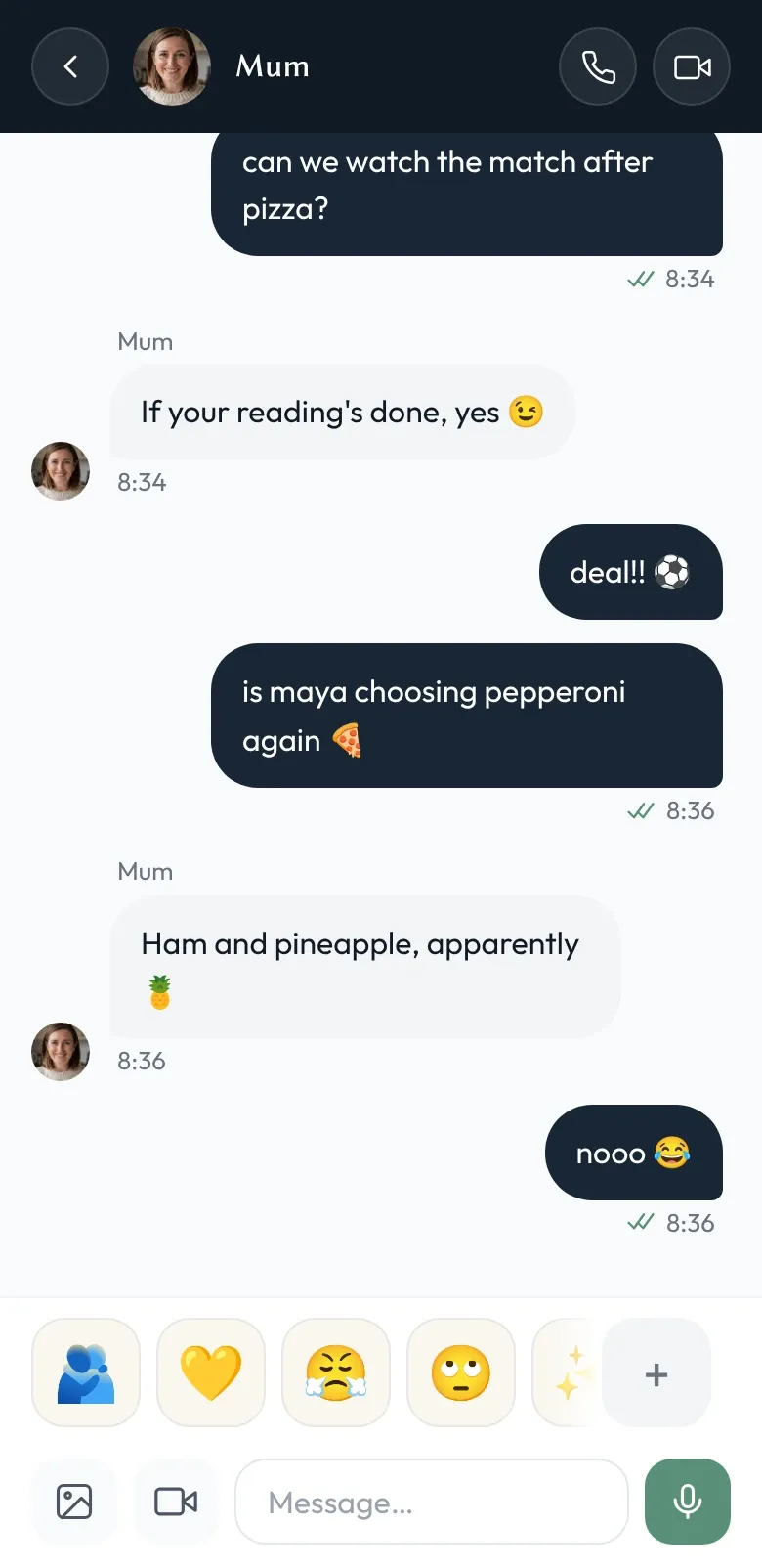
Built for the whole family, not just the kid. Messenger Kids is, by design, a children-only product — adults use the regular Messenger app to talk to a child on Messenger Kids, and parents manage it from their Facebook account. Shoal puts children, parents, grandparents, and other adults in the same app, with no Facebook account needed and conversation visibility that varies by role.
Available in the UK. Messenger Kids launched in the US and has since reached many other countries, but Meta doesn’t currently offer it in the UK or most of Europe. Shoal is the same product on iPhone, Android and the web, wherever you are.
Track record concerns. In July 2019, a design flaw in Messenger Kids let thousands of children into group chats with people their parents hadn’t approved — the very safeguard parents relied on. Facebook (now Meta) shut down the affected chats and told the parents concerned, but the incident is a reminder that “safety features” and “structural safety” aren’t the same thing. Shoal aims for structural safety: two-sided approval for every friend, no public discovery, no algorithmic exposure.
Side by side
| Shoal | Messenger Kids | |
|---|---|---|
| End-to-end encrypted | No (see /security) | No |
| Independent of social media platform | Yes | No (Meta) |
| Advertising | No ads, and no advertising business | No ads in the app; run by an ad-funded company, which says Messenger Kids data isn’t used for advertising |
| Parental approval of contacts | Yes (Connections, approved by both families) | Yes (Parent Dashboard) |
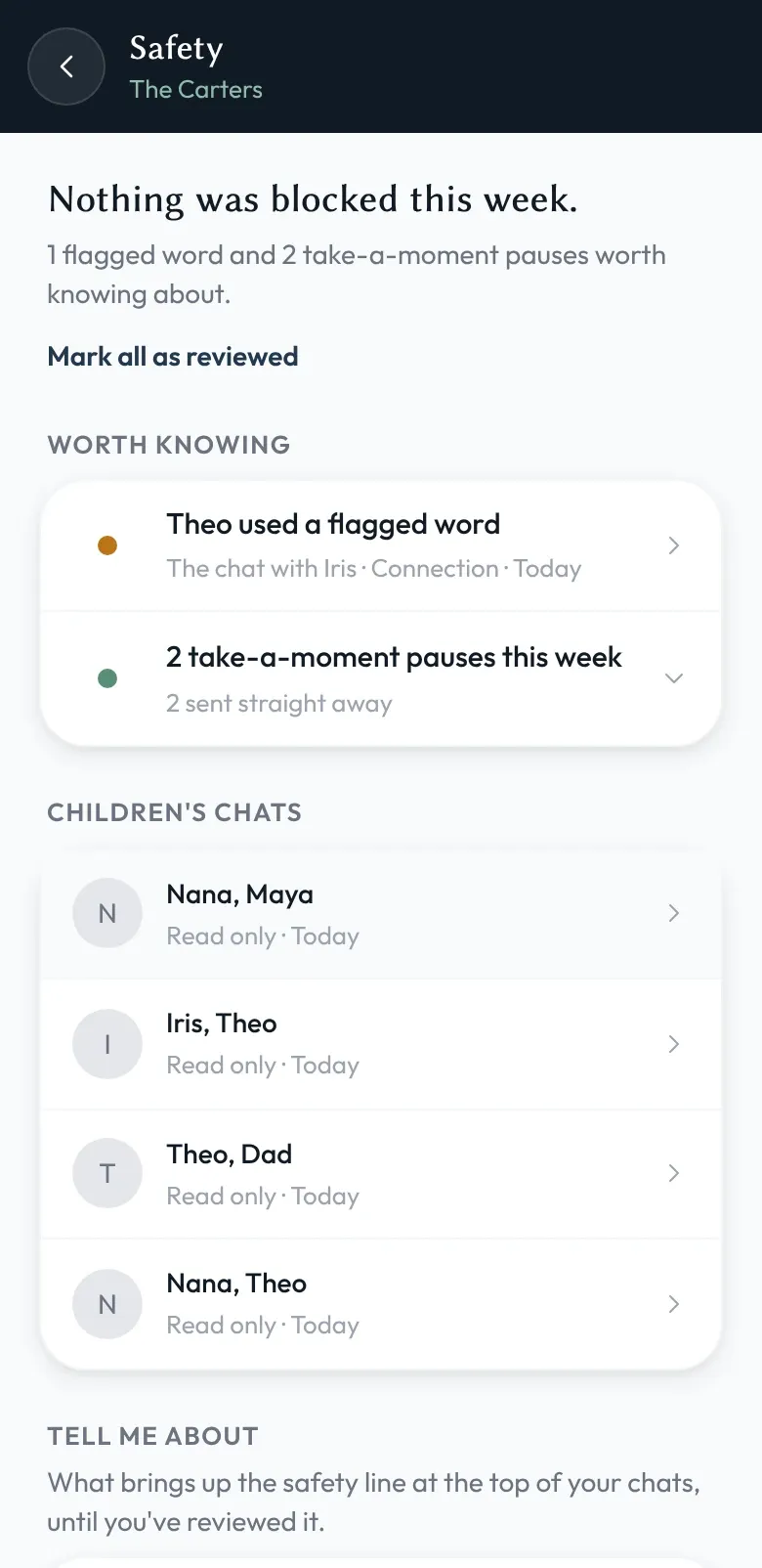
| Parents can see conversations | Yes (read-only oversight view) | Yes |
| Adults and children in the same app | Yes | No (adults use Messenger) |
| Available in the UK | Yes | Not currently |
When to pick which
Pick Messenger Kids if you live where it’s available, your family is already in Meta’s ecosystem, you’re comfortable with that, and you want the integration with Messenger that comes with it.
Pick Shoal if you’d like your child’s first messaging app to be on infrastructure built for family privacy, with messages encrypted on the device, no ad business in the picture, and a clean separation from Meta.
Messenger Kids and Messenger are trademarks of Meta Platforms, Inc. We have no affiliation with Meta.